
Tuff Shed Site Prep & Utilities: The Los Angeles Owner’s Guide
Site prep and utility rough-in for a Tuff Shed in Los Angeles typically runs $4,800 to $14,500 installed, depending on whether you need a simple gravel pad with one electrical circuit or a full foundation with subpanel, water, and sewer stubs. We stock Tuff Shed-compatible anchor systems, gravel and crushed base, concrete forms, and weather-rated conduit on our trucks, so most site prep jobs start within a week of permit approval. Most owners discover they need this work the hard way: they bought the shed, scheduled delivery, and then realized the pad wasn’t level, the power couldn’t reach the structure, or the utility trenching requirement broke the budget they’d planned.
We’re an independent Los Angeles ADU and structure contractor, not affiliated with Tuff Shed, but we install and prep for their product line regularly. Tell me what you need the space to do, and we’ll figure out the honest path to get there.
Which Tuff Shed Models This Applies To
Any Tuff Shed structure headed onto a Los Angeles residential lot needs site prep, but the scope changes sharply by product line. The Premier PRO and Premier Ranch series, commonly used as workshops and studios, require a level surface and, if you’re adding power, a dedicated circuit run from your main panel. The barn-style and two-story models introduce wind-load anchoring requirements that Los Angeles hillside lots make more demanding. If your shed will serve as living space, an office, or a rental unit, you’re crossing into ADU territory, and the utility requirement jumps from one circuit to a full subpanel, with separate permits for electrical, plumbing, and possibly sewer depending on the lot.
The part that matters most for compatibility is the anchor layout stamped into your Tuff Shed floor frame. Look for a small metal plate or engraving near the door threshold showing bolt spacing. Most Los Angeles flat-lot installs use 1/2-inch wedge anchors at 48 inches on center, but canyon and hillside lots routinely call for 5/8-inch epoxy-set anchors at tighter spacing once the structural engineer reviews wind exposure. OEM Tuff Shed anchor kits are fine for standard flat lots, but we regularly substitute Simpson Strong-Tie or Red Head epoxy anchors on sloped sites because the county inspector wants to see the stronger spec regardless of what the shed manufacturer shipped.
Signs Your Tuff Shed Site Prep & Utilities Is Failing
- The shed has settled unevenly, and the doors no longer close square. This means the base material wasn’t compacted properly or water is migrating under the pad. In Los Angeles’s clay-heavy soil, this is the most common failure we see within the first two rainy seasons. The fix starts with re-leveling, not just shimming the door.
- You can see a visible gap between the shed floor and the ground on one corner. Erosion from roof runoff is usually the culprit. Without a proper drip edge and crushed-rock perimeter drain, water cuts away at the pad edge. The structure is still safe to enter, but the gap widens every winter storm.
- Your breaker trips whenever you run a space heater or air conditioner in the shed. The original circuit is undersized for the load, or the wire gauge is too thin for the trenching distance. We see this on delivery-installed electrical packages where the shed was wired for a light and an outlet, then later turned into a home office or gym.
- You smell moisture inside the shed after rain, or the floor feels damp underfoot. Missing vapor barrier under the pad, or no clearance between the structure base and finish grade. Los Angeles gets exactly enough winter rain to reveal this problem every January.
- The shed pulls slightly away from the ground anchors during high winds. Santa Ana events on exposed lots create uplift forces that wedge anchors on shallow embedment can’t hold. You’ll see the base plate lift a fraction of an inch at the corners. This is a safety issue, not a cosmetic one.
Replacement Cost & What’s Included
Here’s what Los Angeles homeowners should expect to pay for Tuff Shed site prep and utility rough-in, installed, with permits handled by us:
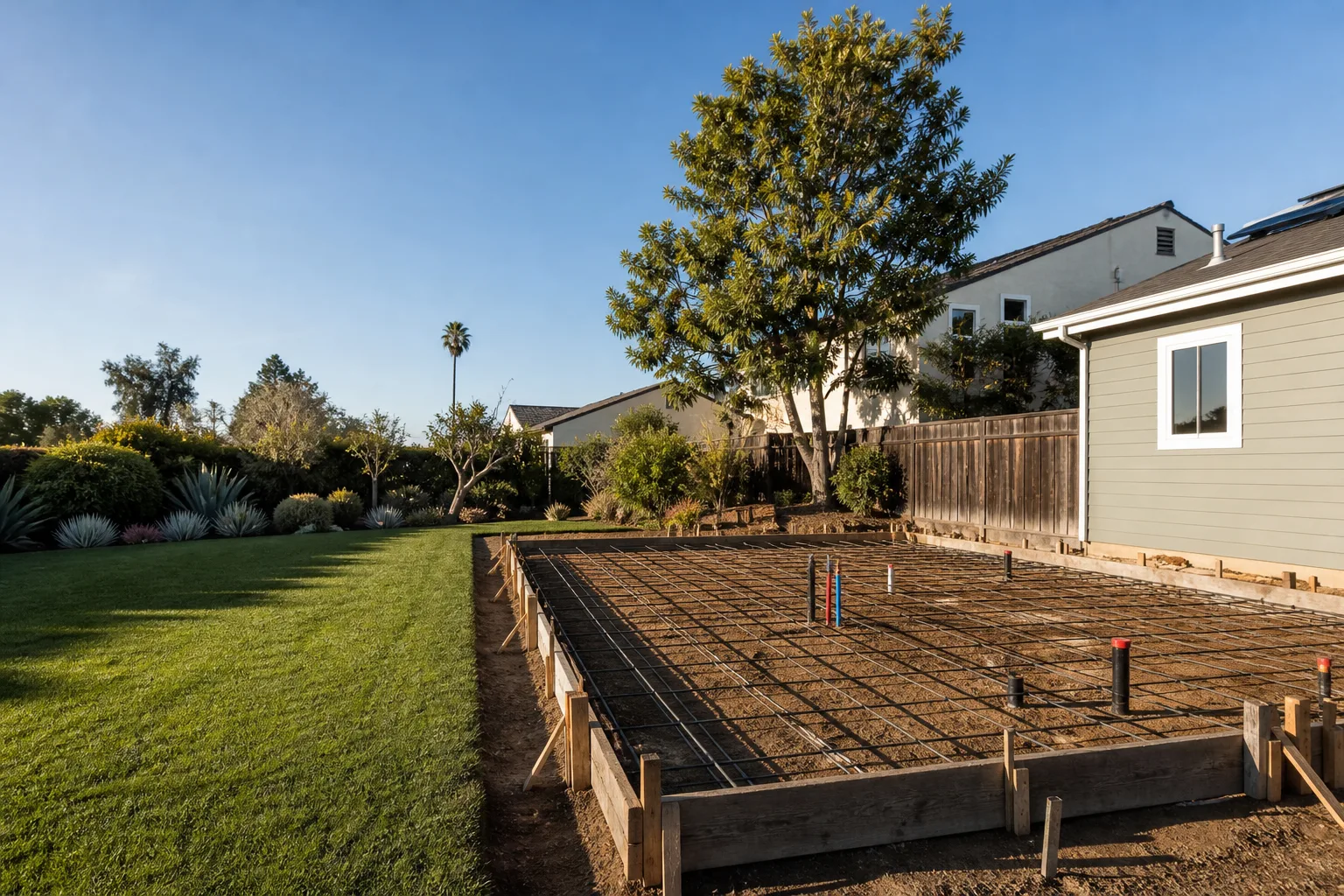
- Gravel pad, no utilities: $4,800 to $6,900 – excavation, compacted base, Class 2 road base, perimeter containment, final level check
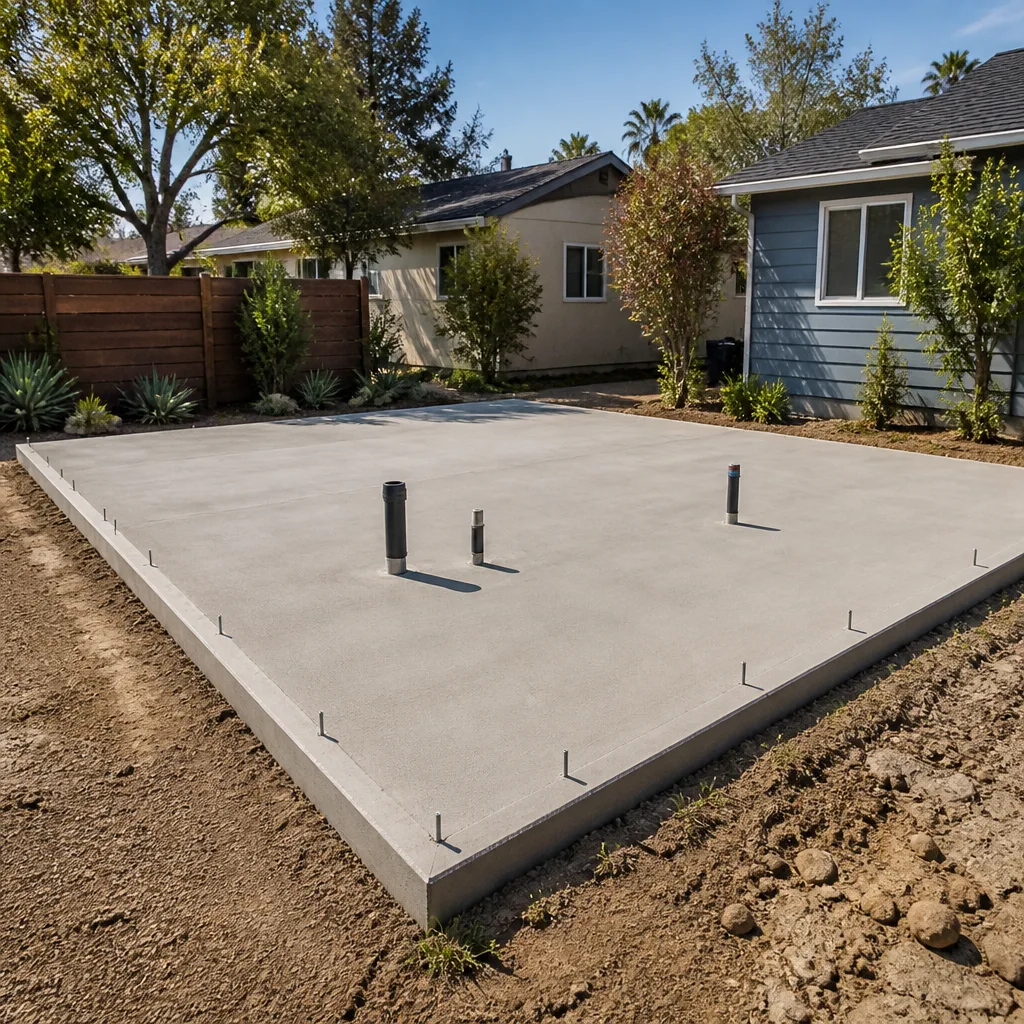
- Concrete slab, no utilities: $7,200 to $9,800 – forms, rebar, vapor barrier, 4-inch pour, finish, anchor bolts wet-set at Tuff Shed spacing
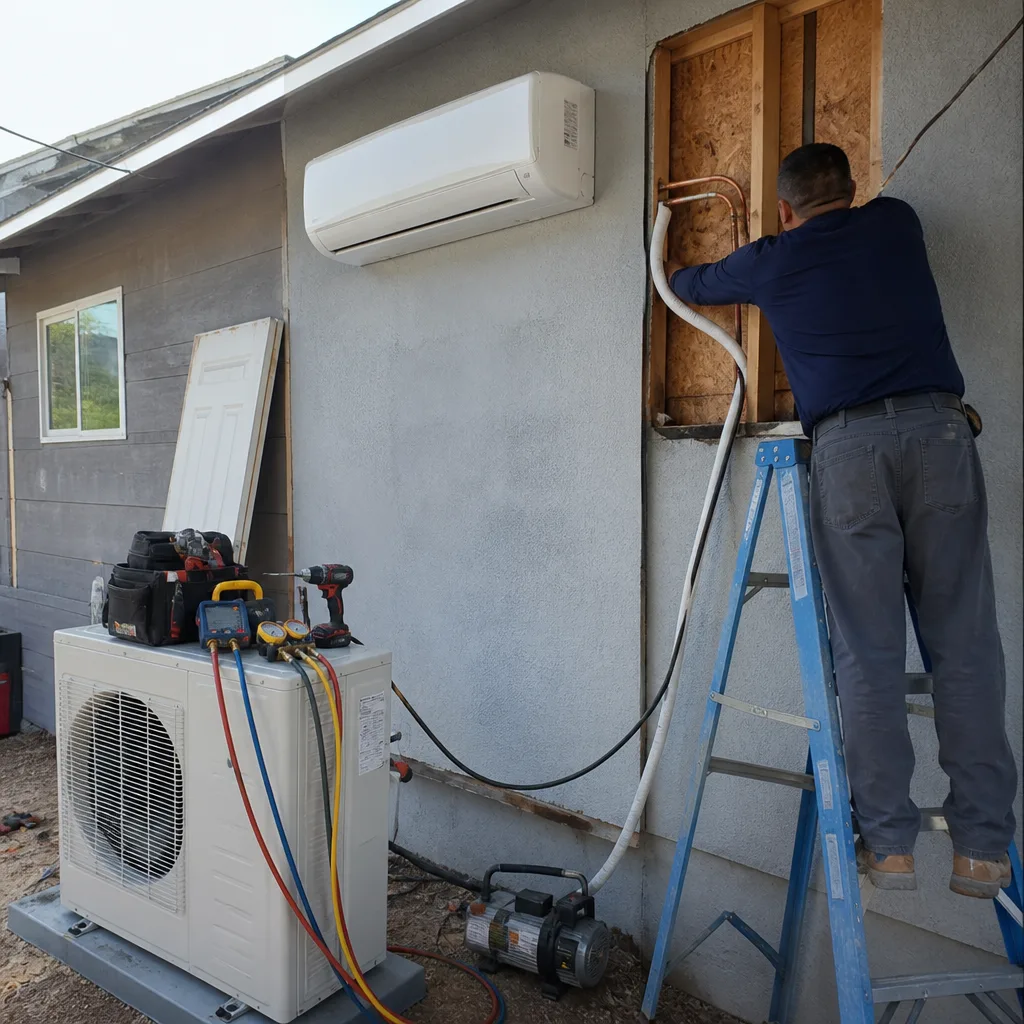
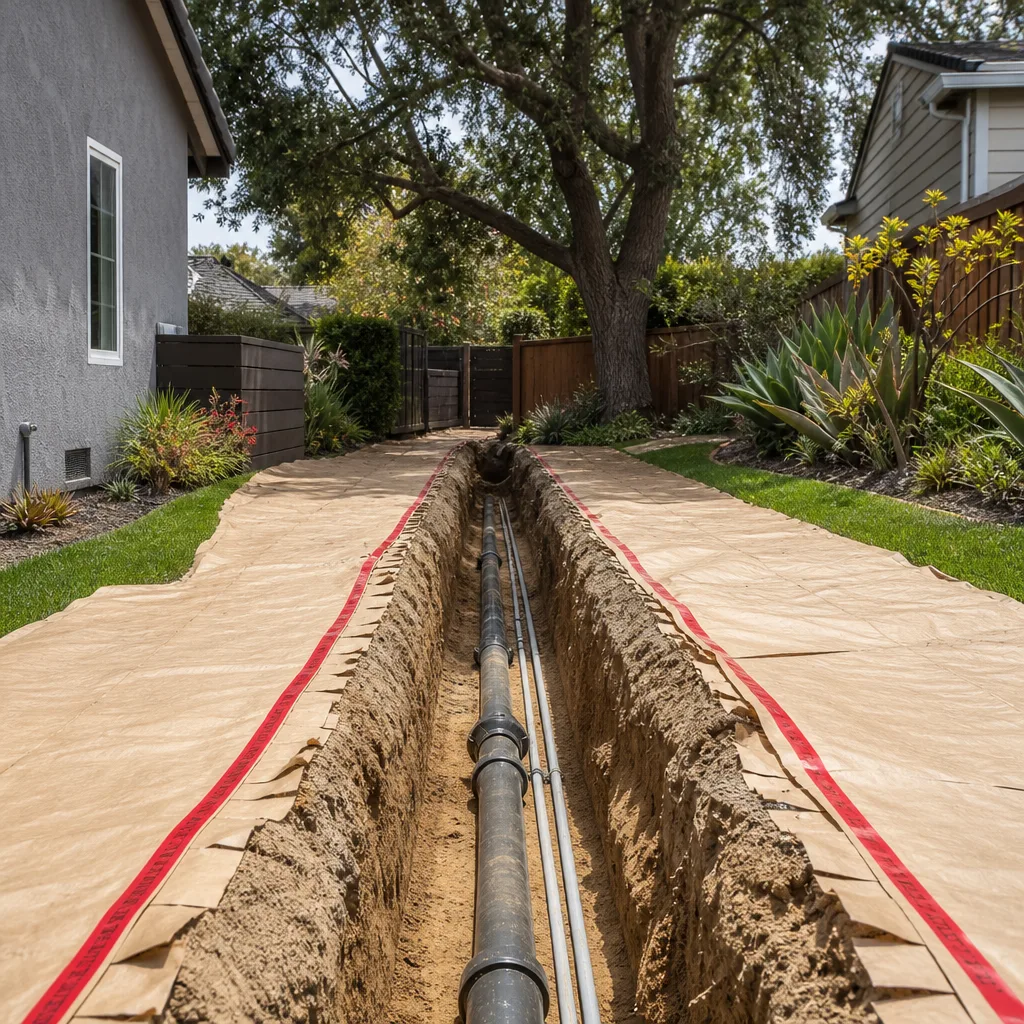
- Electrical rough-in, single 20A circuit: $1,800 to $3,200 – dedicated breaker, conduit trench, weather-rated outdoor outlet, final connection box
- Full utility package for ADU conversion: $8,500 to $14,500 – subpanel, 100A feed, water stub, sewer or septic tie-in where lot allows, trenching, inspections
The range comes down to three things: access for excavation equipment (side yard versus backyard, which changes labor substantially), trenching distance from your main panel and existing utility lines, and soil condition once we dig. Every quote you get from us is a written line-item price before work starts, and we don’t add change-order surprises after the crew arrives. The installation work is covered by our 365-Day Done Right Promise: if something isn’t right, we make it right.
| Scope | Typical Los Angeles Price | Includes |
|---|---|---|
| Gravel pad | $4,800 – $6,900 | Excavation, base, compaction, level |
| Concrete slab | $7,200 – $9,800 | Forms, rebar, vapor barrier, anchors |
| Single circuit | $1,800 – $3,200 | Breaker, conduit, weather-rated outlet |
| Full ADU utility package | $8,500 – $14,500 | Subpanel, water, sewer stub, inspections |
DIY or Call Us?
You can safely handle the planning questions: measuring your lot slope, checking setback distances from property lines, and confirming with LADBS what your zone allows. Site prep itself involves excavation, compaction, leveling, and anchor placement that determines whether your structure survives the next earthquake or Santa Ana event. Electrical work on a Tuff Shed touching your home’s panel is not a weekend project. We don’t frame it that way to sell you a job; we frame it that way because we’ve corrected underground conduit runs where the wire was the wrong gauge, buried too shallow, and flagged by an inspector with a stop-work notice. Utility trenching has killed DIYers who didn’t call 811 before digging. If the scope involves power, water, or a hillside, call us at (213) 449-7136 and we’ll give you a written price. If it’s a flat-lot gravel pad and you want to spend a weekend with a plate compactor, we’ll tell you how to do it correctly, happily, no charge for the advice.
FAQs
A compacted gravel pad with perimeter drainage typically lasts 10 to 15 years before it needs releveling, and a concrete slab with proper reinforcement and a vapor barrier will outlast the shed itself. The weak points are drainage and rodents, both of which eat away at the base over time in Southern California. Call (213) 449-7136 and we can look at your specific lot slope and soil before you commit to a pad type.
Yes, in most cases a settled slab or pad can be mudjacked, releveled, or have anchor points added without a full repour. We’ll tell you honestly which is cheaper over five years. If the concrete is cracked through the full depth or the rebar was never installed, replacement usually costs less than chasing repairs. We’ll put that in writing before you spend a dollar.
Gravel pad prep is typically two to three days including inspection. Concrete slab work is five to seven days with cure time, and full utility packages for an ADU conversion run three to four weeks with permit inspections. Los Angeles permit timelines at LADBS can add several weeks depending on your district; we’ll give you the realistic window when we quote.
We stock Tuff Shed-compatible anchor sets, Simpson Strong-Tie hardware, common conduit sizes, weather-rated boxes, and the vapor barrier and base materials our crews use daily on Los Angeles jobs. If your job needs a specialty part, we source it within one to two business days. We install with the same care on a shed foundation as we do on a full ADU for Abodu, Cover, or Dvele builds, and the written price covers every bolt and every foot of trench.
Written by Ben Ortega, Owner, Seedling ADU Los Angeles at Seedling ADU Los Angeles, serving Los Angeles and nearby areas.


