
James Hardie ADU Design & Permitting: The Los Angeles Owner’s Guide
James Hardie siding and trim for an ADU in Los Angeles typically runs $18 to $34 per square foot installed, with full design and permitting services adding $8,000 to $14,000 depending on your lot, setbacks, and what the city asks for. We stock James Hardie plank, panel, and trim products for ADU projects, and our team handles the design drawings, structural calculations, and permit submission as one package. Most owners realize their James Hardie-related project has gone sideways when the city flags plans, when old siding was cut wrong around windows, or when a previous builder left Hardie joints unflashed and now water is getting behind the boards.
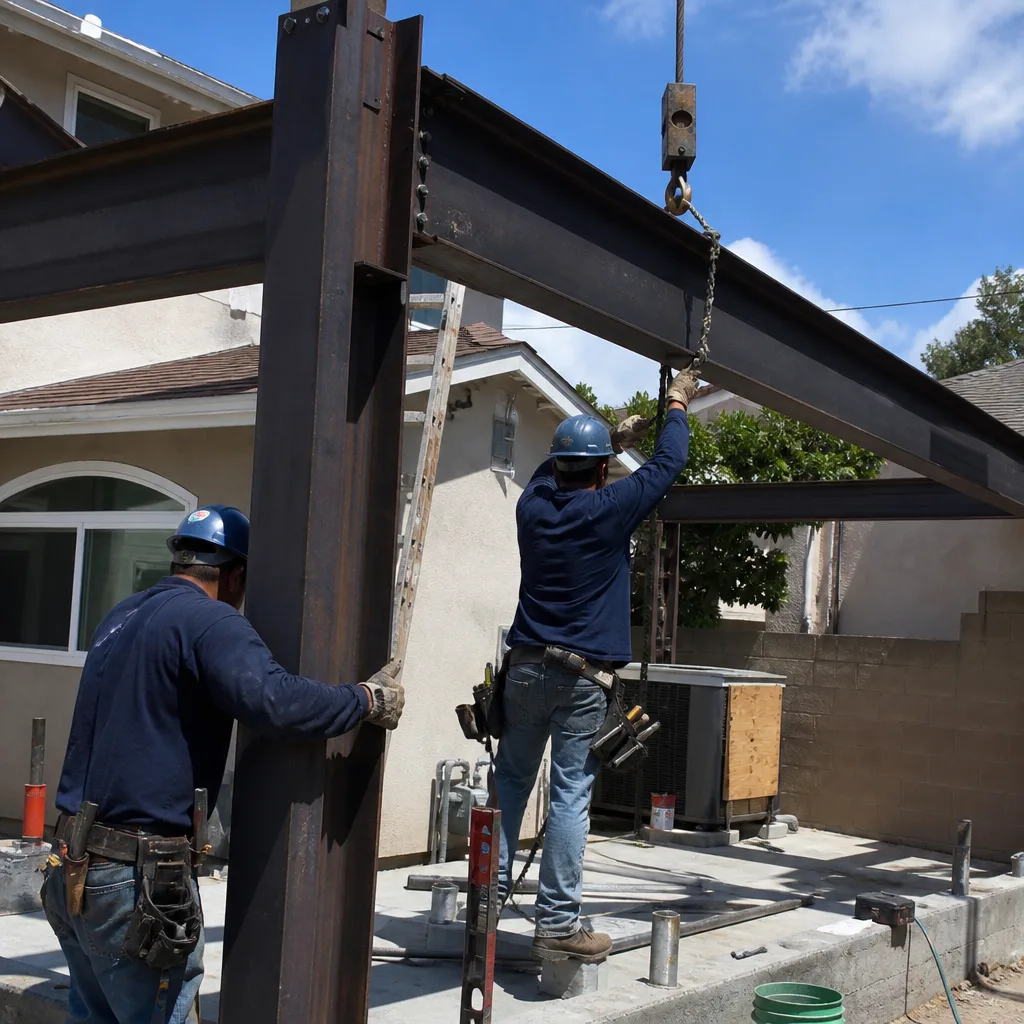
What we see most often in Los Angeles: a homeowner bought a prefab or modular ADU shell, the builder finished it with James Hardie lap siding, and two or three years later the joints are opening up near the eaves because the original installer didn’t leave the 1/8-inch expansion gap Hardie requires. Or the permit drawings didn’t match what got built, and now the city is asking for as-builts and corrections. These are fixable, but they’re the reason we always insist on doing the design, permitting, and install as one continuous job instead of handing off between three different crews.
Key Takeaways:
- Installed James Hardie siding for a typical 800 sq ft ADU in Los Angeles runs $14,000 to $27,000, with design and permitting as a separate line item.
- Hardie plank color and texture options for LA’s climate: we recommend the primed or factory-painted panels for coastal fog zones, and the vented rain-screen detail for hillside lots.
- We are an independent Los Angeles ADU contractor; we buy James Hardie materials directly from authorized suppliers and are not affiliated with James Hardie.
Which James Hardie Models This Applies To
James Hardie makes a few different product lines that show up on ADUs in Los Angeles, and they’re not interchangeable without understanding the specs. The HardiePlank lap siding is the most common on both detached ADUs and garage conversions, available in 5/4-inch and 8-1/4-inch exposures, in primed or ColorPlus factory-finished versions. Then there’s HardiePanel vertical siding, often used for a board-and-batten look or as shear paneling on prefab units. HardieTrim boards, the 5/4-inch thick stock used around windows and corners, have their own fastening schedule and gap requirements. And HardieSoffit panels go under eave overhangs, which matters in Los Angeles where flying embers can get pulled into soffit vents during fire season. If you can find the product label on a leftover board or the edge of the shed, take a photo of the barcode and thickness marking before you call us. That exact spec decides whether we can match what’s already on the wall or whether the city will require the whole elevation re-sided.
The compatibility gotcha in Los Angeles: many older ADUs and garage conversions from the 2000s used the original Hardie product called Hardiplank, which had a different nominal thickness (7/16-inch) than today’s HardiePlank (5/16-inch). If a wall needs patching and you have the old 7/16-inch product, matching it requires custom ripping and shimming, not just grabbing a new board off the shelf. For prefab and modular ADUs from Abodu, Cover, or Dvele we see factory-installed Hardie with precision trim details that an aftermarket patch job can’t replicate. In those cases, we source the exact ColorPlus formulation from the manufacturer’s approved Los Angeles distributor rather than substituting paint.
For most Los Angeles ADU projects, we use genuine James Hardie product. The aftermarket fiber-cement boards available from other brands cost 15 to 25 percent less, but the warranty is shorter, the color match drifts in Southern California sun, and some don’t carry the same fire-resistance documentation the city wants to see on hillside ADU submittals. Where the budget is tight, we’ll talk honestly about where aftermarket makes sense (interior garage walls, low-visibility rear elevations) and where it doesn’t (street-facing walls, wet zones, fire-prone areas).
Signs Your James Hardie ADU Design & Permitting Is Failing
- Water stains at horizontal joints or around window trim. Hardie board is water-resistant, not waterproof, and the joints are where problems start. If you see dark streaks at the butt joints or under window sills on your ADU in Los Angeles, water has been getting behind the boards for a while, and the OSB sheathing behind it is likely swelling.
- Caulk lines cracking or separating within a year of install. This usually means the installer used the wrong sealant or skipped the required 1/8-inch gap between boards. Fiber cement expands and contracts with temperature and humidity, and Los Angeles days that swing 40 degrees between morning and late afternoon will crack rigid caulk quickly.
- Boards curling or lifting at the bottom edge. If the bottom course of HardiePlank sits less than 6 inches above grade at any point around the ADU, splash-back moisture wicking into the board eventually causes the edge to warp. On sloped Los Angeles lots this happens at the low corner of the building first.
- Paint blistering or peeling only on one elevation. That’s the sun-side failure pattern we see on south-facing and west-facing ADU walls in neighborhoods like Sherman Oaks, Encino, and Woodland Hills. The board itself is usually fine, but the factory finish or field-applied paint has broken down from UV and thermal cycling.
- City inspector flags the permit drawings as non-compliant. Maybe the window egress doesn’t match, the wall assembly detail doesn’t show the required fire-rated construction, or the roof drainage plan is missing. This is a design-and-permitting failure, and it stalls the job until corrected plans are submitted. We handle those corrections in-house.
Replacement Cost & What’s Included
For Los Angeles, here’s what we quote on James Hardie ADU design, permitting, and installation, broken into line items so there’s no mystery on the invoice:
- ADU design package (site plan, floor plan, elevations, structural notes): $3,500 to $5,500
- Permit expediting and city submittal: $1,800 to $3,200 depending on the building department and whether plan check requires revisions
- James Hardie siding materials (HardiePlank, HardiePanel, HardieTrim, fasteners, flashing, sealant): $4 to $9 per square foot
- Installation labor (demo, prep, rain screen if required, install, flashing, painting if not factory-finished): $8 to $14 per square foot
- Full project example (800 sq ft ADU, primed HardiePlank, standard lap exposure, no second story): $14,000 to $18,400 total
Every estimate from Seedling ADU Builders is a written line-item price before we touch the property. That includes the design work, the permit submittal, the materials, the labor, and the haul-away. If we find rot under the old siding once it’s open, we document it with photos and give you the revised cost before we proceed, not after. The work is covered by our 365-Day Done Right Promise. If it isn’t done right, we make it right, in writing, on every job.
DIY or Call Us?
What you can safely check yourself: walk the perimeter and note where boards are curling, where caulk is cracked, and where the bottom course sits less than 6 inches from soil. Take photos and measurements of any damage. That’s genuinely useful and helps you have an informed conversation with any contractor. What you shouldn’t DIY: removing and reinstalling fiber cement boards near windows, doors, and the roofline. Hardie board is heavy, brittle at the edges, and silica dust from cutting it is a respiratory hazard. Improper flashing at the top of a wall or around a window means water pours behind the siding the next time a Los Angeles winter storm hits. If your ADU design drawings were rejected, don’t try to redraw them yourself; building departments in Los Angeles reject more amateur drawings than anything else, and each rejection adds weeks to your timeline. Call us at (213) 449-7136, tell us what you’re seeing, and we’ll tell you honestly whether it’s a patch job or a re-side. Ben Ortega grew up in Eagle Rock and has spent the better part of the last decade on ADU work specifically, so the answer comes from doing the job, not from a script.
FAQs
James Hardie fiber cement siding typically lasts 30 to 50 years in Southern California’s climate, but the caulked joints and paint film will need attention every 7 to 10 years. Factory-finished ColorPlus boards hold up better than field-painted boards in Los Angeles sun, especially on south-facing walls. Call (213) 449-7136 if you want us to look at the specific condition of your ADU before you assume the worst.
Individual damaged Hardie boards can be cut out and replaced without re-siding the whole wall, but only if the surrounding boards are sound and we can match the reveal and texture. If water has been getting behind the boards, the repair gets bigger because the sheathing and flashing need to be inspected and likely repaired. An estimate from us for patch repairs is free and gives you a clear picture before you decide.
A full re-side of a typical 800 sq ft ADU in Los Angeles takes 5 to 10 working days, depending on whether the crew is also replacing flashing, repairing sheathing, and painting. The permitting and design work happens before any of that and can take 2 to 6 months depending on the city and the complexity of your lot. We don’t rush the build, and we protect your floors, your landscaping, and your daily routine while the crew is on site.
We stock the most common James Hardie colors, trim profiles, flashing tapes, and sealants on our trucks for ADU projects, so when we open a wall and find a problem we can often keep working the same day. Uncommon ColorPlus colors and specialty trim profiles are sourced from James Hardie’s Los Angeles distributors, usually within 2 to 4 business days. Tell us what you need the space to do, and we’ll figure out the honest path to get there.
Written by Ben Ortega, Owner, Seedling ADU Los Angeles at Seedling ADU Los Angeles, serving Los Angeles and nearby areas.


