
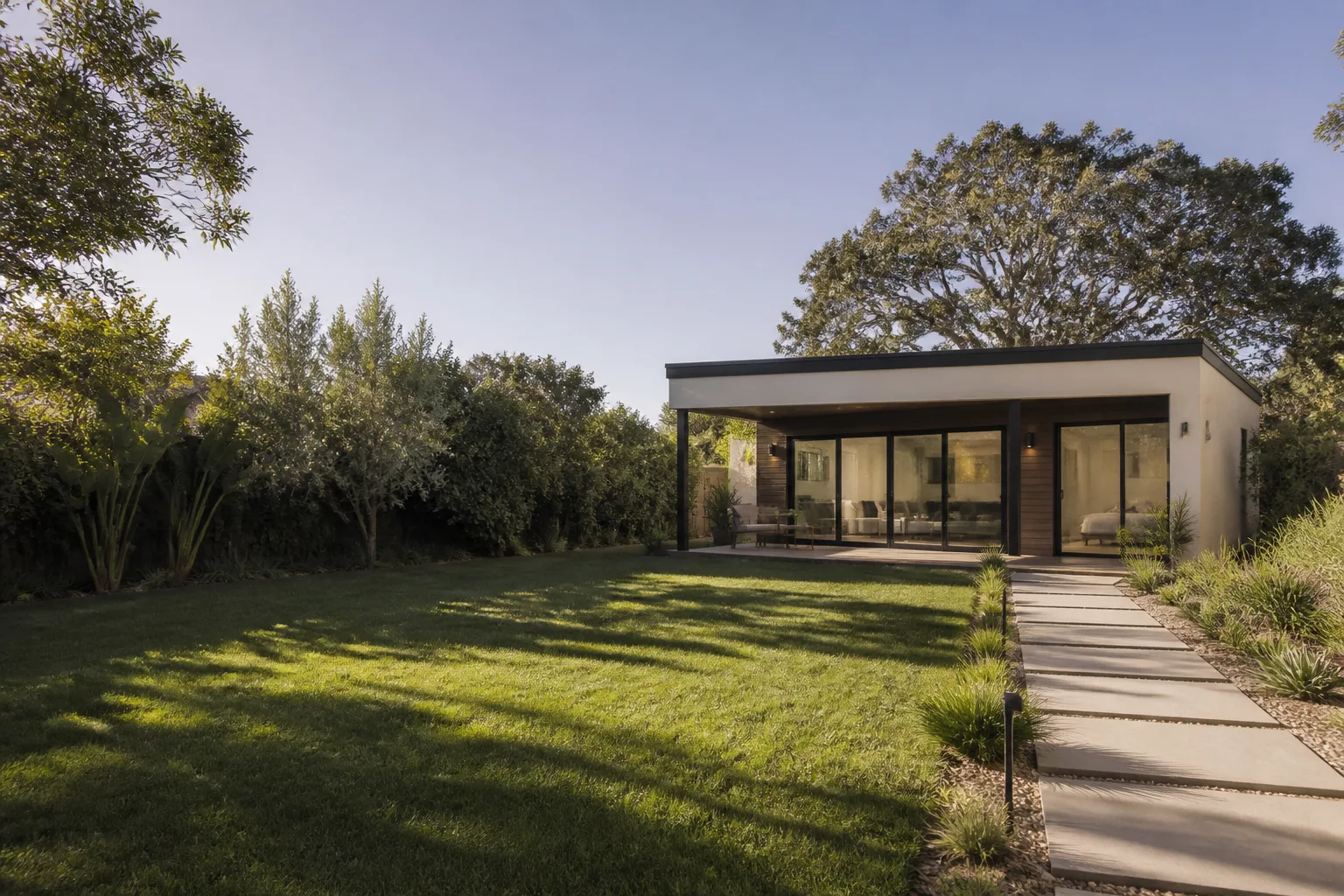
James Hardie New Detached ADU: The Los Angeles Owner’s Guide
Building a new detached ADU with James Hardie siding and trim in Los Angeles typically runs $285 – $425 per square foot all-in, depending on site prep, foundation type, and finish level. That’s the honest range we quote most often at Seedling ADU Los Angeles, and we walk every family through a written line-item price before any crew shows up. Most owners who call us aren’t replacing a single failed part on an existing unit – they’re planning a full new build and want to know that the James Hardie materials will hold up to Los Angeles sun, Santa Ana winds, and the occasional downpour without warping, cracking, or fading in five years.
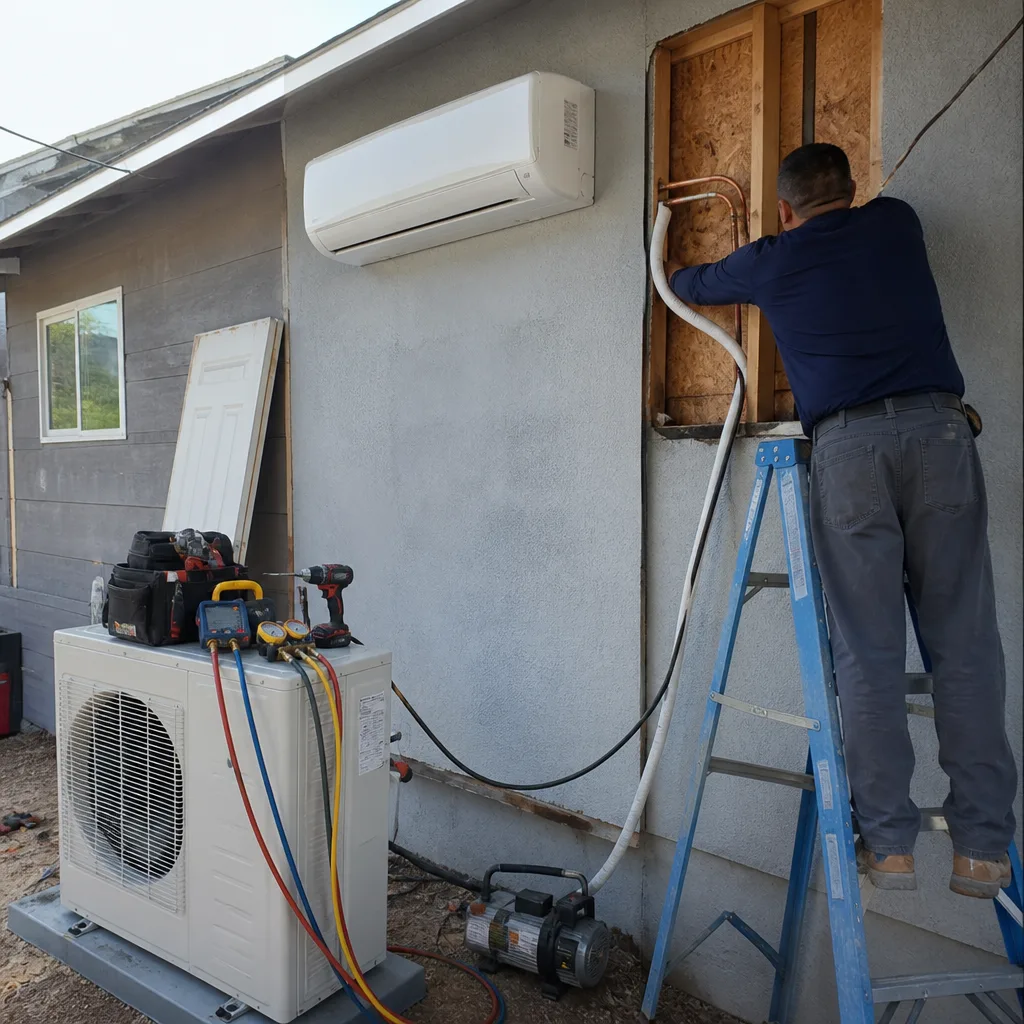
We’re an independent ADU builder that works extensively with James Hardie fiber cement products. We’re not affiliated with James Hardie – we simply trust their siding, trim, and backer board more than anything else we’ve pulled off a truck, and we’ve built enough detached units across Los Angeles to know what fails first and why.
Which James Hardie Products This Applies To
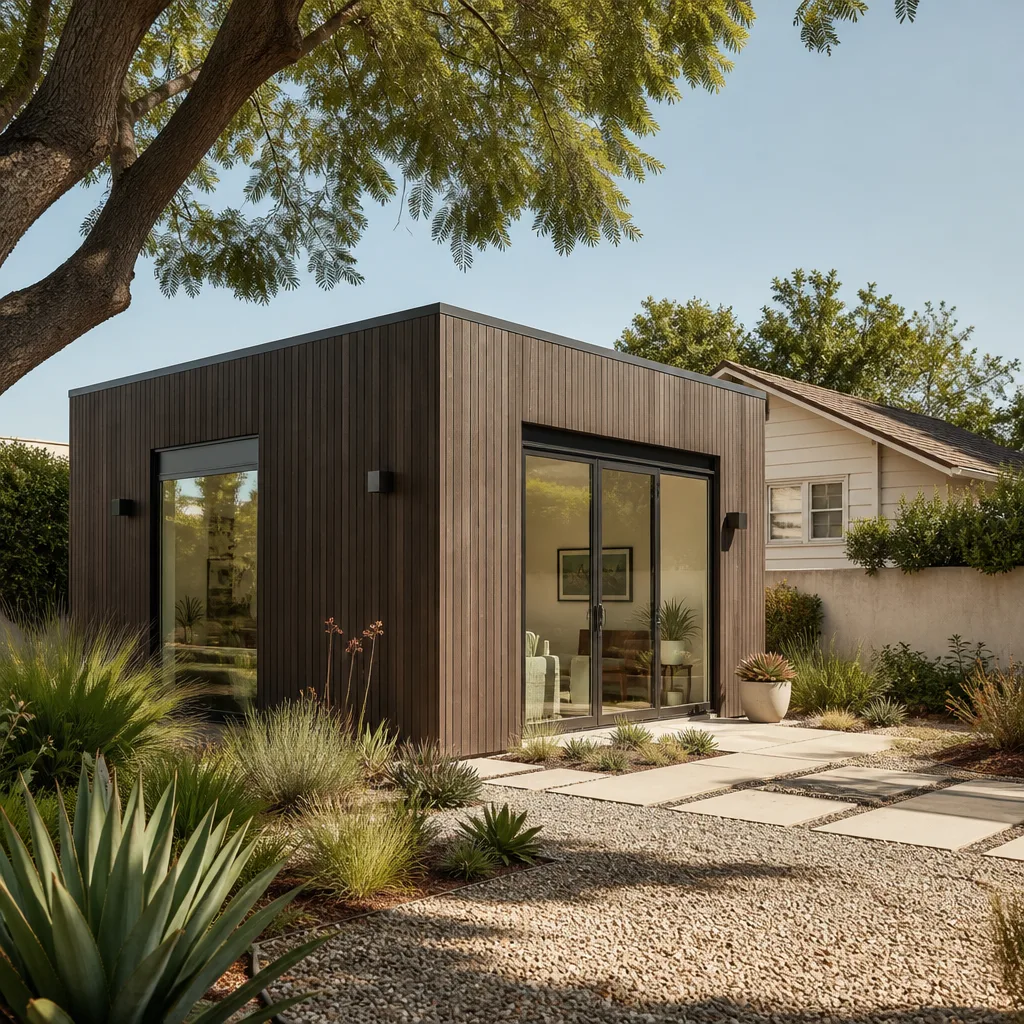
When we talk about James Hardie on a new detached ADU, we’re almost always specifying HardiePlank lap siding, HardiePanel vertical siding, HardieTrim boards, and HardieBacker cement board for wet areas. The compatibility question that trips up owners and even some contractors is this: HardiePlank and HardiePanel are not interchangeable for every wall plane, and the fasteners matter as much as the board. HardiePlank lap siding comes in 5/16-inch thickness at 8¼-inch and 6¼-inch exposures, while HardiePanel arrives in 4×8, 4×9, and 4×10 sheets at 5/16-inch thickness. We see a lot of Los Angeles garages and additions where someone used the wrong exposure or nailed too close to the edge, and the board cracks within two seasons.
For trim, HardieTrim is available in smooth and cedar-textured finishes, in widths from 3½ to 12 inches. The spec that trips people up: James Hardie requires a 1/8-inch gap at trim-to-trim joints and a 2-inch gap where trim meets roofing or horizontal surfaces. Miss that gap and moisture wicks into the cut edge, which is exactly what we find when we’re called to repair a poorly executed ADU exterior in neighborhoods like West Adams or Encino.
We recommend genuine James Hardie products over aftermarket equivalents every time. The aftermarket fiber cement we’ve tested doesn’t hold paint the same way, and color-matched factory finishes like Hardie’s baked-on ColorPlus technology simply don’t have a reliable generic match. For a new detached ADU that should stand for forty years, the material cost difference is too small to gamble on.
Signs Your James Hardie New Detached ADU Is Failing
- Paint peeling or chalking within 3 – 5 years. This usually means the siding was installed without proper flashing at horizontal joints, or someone painted over moisture trapped in the board. In Los Angeles, the west-facing wall of an ADU gets hammered by afternoon sun, and we see chalking there first.
- Crumbling or soft corners on siding boards. Fiber cement stays rigid, but repeated water exposure at a poorly sealed cut edge can break down the board from the inside. If you can press a screwdriver into the edge, the board is compromised and needs replacement before it spreads.
- Gaps opening at trim joints. HardieTrim moves with temperature swings, and without the required 1/8-inch joint gap and proper caulking, boards push against each other and crack. You’ll spot hairline vertical cracks at outside corners first.
- Black staining or mold streaks on shaded walls. In Los Angeles, north-facing walls and areas under trees stay damp longer than the sun-baked sides. If the siding wasn’t pre-primed on cut edges or the bottom edge isn’t 6 inches above grade, mold takes hold.
- Wavy siding lines when you sight down the wall. This tells us the original framing wasn’t straight, and someone forced the HardiePlank to follow it. Fiber cement doesn’t flex like vinyl or wood – it cracks under that stress, usually within a few years of install.
Replacement Cost & What’s Included
When we’re replacing failed James Hardie siding or trim on a detached ADU in Los Angeles, the scope usually falls between $4,800 and $14,000, depending on how much of the wall envelope is affected. A single wall of HardiePlank replacement with new flashing, paint, and haul-away runs $4,800 – $7,500. A full re-side of a 400-square-foot ADU with HardiePanel and new trim typically lands between $9,500 and $14,000. That includes tear-off of the damaged material, inspection of the underlying weather barrier, replacement of any rotted sheathing, new James Hardie products, proper flashing, caulking, painting, and a clean jobsite at the end of every day.
What drives the cost up or down: how much framing repair is hiding behind the failed siding, whether we’re matching an existing ColorPlus color or repainting the whole unit, and whether the damage goes into the roof line or foundation detail. We give every family a written price before work starts, so there’s no surprise line item when we find rotted sheathing – the price accounts for what we can see, and we’ll walk you through anything we find before we touch it. Every replacement job is covered by our 365-Day Done Right Promise: if it’s not done right, we make it right.
DIY or Call Us?
Fiber cement siding isn’t high-tension dangerous like garage door springs, so there are safe inspection steps any owner can take: sight down your walls for wave or bulge, press on suspicious edges with a screwdriver, and check that your bottom edge sits 6 inches above soil. Those checks tell you whether you have a problem. The DIY danger comes in the replacement: cutting fiber cement produces silica dust, which is a serious respiratory hazard without proper shrouding and a respirator. It also requires specialized shears or a Hardie-specific blade, and if you nail it wrong or skip the flashing details, your new siding fails faster than what you tore off. If you’re doing a whole wall, call us at (213) 449-7136 and we’ll give you an honest written estimate.
FAQs
James Hardie fiber cement siding should last 40 – 50 years in Los Angeles when properly installed and maintained with the correct gaps, flashing, and paint. The board itself won’t rot, but the installation details determine whether your ADU reaches that lifespan or fails in ten years.
Individual boards and trim pieces can be swapped out if the damage is isolated to one section, and we do that regularly for boards with edge crumble or corner cracks. But when multiple boards on a wall show failure, the underlying flashing or moisture issue is systemic, and spot repairs just delay the full re-side. Call (213) 449-7136 and we’ll give you an honest answer on whether repair is worth it.
Most single-wall replacements take 3 – 5 working days, and a full re-side of a typical 400-square-foot ADU runs 7 – 10 working days, including painting. Weather in Los Angeles rarely delays us, but paint cure times and any hidden sheathing repair can add a day or two.
We keep common HardiePlank lap siding profiles, HardiePanel sheets, and HardieTrim in our most-used Los Angeles widths on hand, so many small repairs can start without waiting on supply. For odd colors or custom widths, we order directly from the local James Hardie distributor and factor that lead time into your written timeline.
Written by Ben Ortega, Owner, Seedling ADU Los Angeles at Seedling ADU Los Angeles, serving Los Angeles and nearby areas.


