
Abodu ADU Builders in Los Angeles: What to Know First
Seedling ADU Los Angeles installs, finishes, and services Abodu prefab ADUs across Los Angeles as an independent Abodu service provider. A typical Abodu project in LA runs 6 to 10 months from permit submittal to move-in, with the on-site installation phase usually taking 4 to 8 weeks once the modules arrive. We give every family a written price before any work starts, so you’ll know the full number before a single tool leaves the truck.
This page is for homeowners who have already chosen an Abodu unit, or are leaning that way, and need a builder who actually knows how these buildings go together on an LA lot. If you’re weighing Abodu against other prefab brands like Cover or Dvele, we can walk you through the differences honestly. Call (213) 449-7136 to talk through your project.
How Abodu Products Fail – and How We Fix Them
Abodu builds a solid product, but every prefab line has its pressure points. Here’s what we see on real Los Angeles lots, and what we do about it.
- Studio 340 and Studio 500 units: drywall hairline cracks above window and door headers. These smaller Abodu units ship as complete boxes, and the modules flex slightly during transport on Southern California freeways. After setting and leveling, the seams settle and hairline cracks appear at the headers. We re-tape, re-texture, and repaint those areas, then check the leveling so the fix lasts. This is a settling symptom, not a structural problem, and it’s one Abodu’s own documentation doesn’t cover in detail.
- One-bedroom 500 and 610 models: mini-split condensate lines that clog faster than expected. Los Angeles air carries fine dust and pollen that builds up in the condensate drain lines of the ductless mini-split systems Abodu pairs with these units. A clogged line backs up and drips inside the wall cavity. We clear the line, install a cleanout port so future blockages get flushed in minutes instead of hours, and set the unit to drain properly away from the foundation.
- Detached units on pier foundations: leveling drift in expansive clay soil. Parts of Los Angeles, especially the San Fernando Valley and areas near the hills, sit on clay that swells and shrinks with rain and drought cycles. Abodu’s standard pier-and-beam foundation can drift a quarter inch or more in a wet winter. We re-shim and re-level, check the door swings so the unit doesn’t bind, and document the elevations so you have a baseline for the next dry year.
- Exterior siding joint separation at module seams. On multi-module Abodu units, the vertical seam where two modules meet can open slightly as the building settles, especially on lots with a slope. We re-flash and re-seal those seams, matching Abodu’s siding profile and paint so the repair is invisible. We use the same flashing approach Abodu specifies, which keeps your warranty intact.
- Electrical panel labeling that doesn’t match the as-built condition. Every Abodu unit ships with a clean panel schedule, but once site electrical work ties into the main house panel, the labels often stop matching the real circuits. We re-label every breaker, map each circuit to its actual outlet, and leave a printed schedule inside the panel door. It’s a small thing, but it’s the first place an electrician or a homeowner looks when a breaker trips at 9pm.
Our Abodu ADU Builders Process
Here’s how an Abodu project actually goes with us, from the first call to the day you hand a key to a tenant or a parent.
- 1
Site walk and honest feasibility check. We walk the lot with you, check setbacks, utility access, and the condition of the area where the unit will sit. Before we leave, you’ll know whether your site works for an Abodu unit as-is, what prep work it needs, and what the realistic timeline looks like.
- 2
Written price before any work starts. We send a line-item written price covering foundation work, utility connections, module setting, interior finishing, and the site clean-up. No change orders appear after crews arrive unless you ask for something new.
- 3
Foundation and utility prep. Our crew handles the concrete or pier work, the trenching for electric, water, and sewer, and the coordination with your utility providers. We pull permits and schedule inspections so the work passes the first time.
- 4
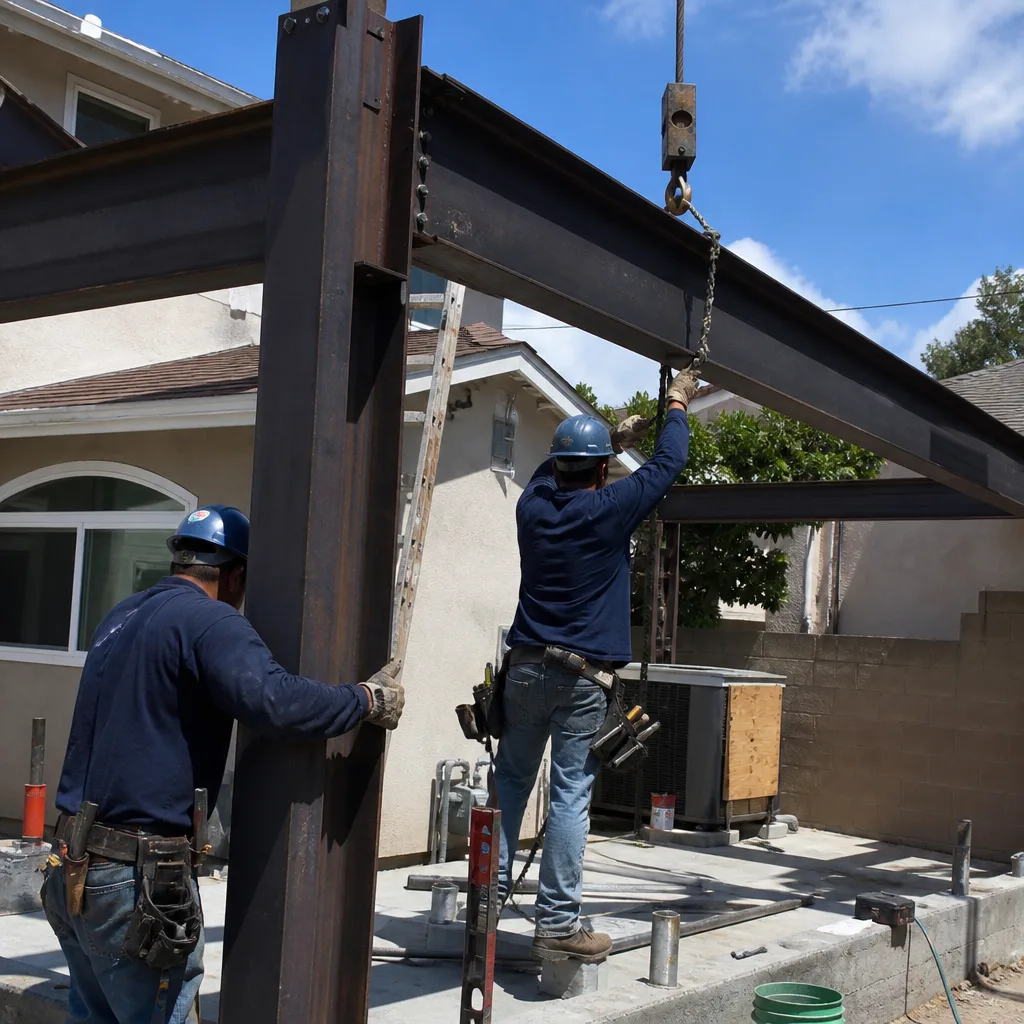
Module delivery and setting. When Abodu delivers the modules, we’re on site to set them, bolt them down, tie the modules together, and connect the utilities. This is the day the building becomes a building.
- 5
Interior finishing and punch list. We handle drywall seams, paint, trim, flooring transitions, and all the details that turn a delivered box into a finished home. Before we call the job done, you walk the unit with us and we fix anything that isn’t right.
- 6
Clean-up, photo documentation, and the 365-Day Done Right Promise. Shoe covers and drop cloths were used throughout. We take a photo of the clean-up before the crew leaves each day, and the whole job is backed by our written 365-Day Done Right Promise: if it’s not done right, we make it right.
What Abodu ADU Builders Costs in Los Angeles
Here’s what families in Los Angeles typically budget for an Abodu unit, installed and finished, as of 2026. These are real ranges, not estimates padded for a sales call.
- Studio 340 (340 sq ft): $180,000 – $230,000 all-in, including site prep, foundation, utilities, and finish work.
- Studio 500 (500 sq ft): $220,000 – $280,000 all-in.
- One-bedroom 500 (500 sq ft): $230,000 – $290,000 all-in.
- One-bedroom 610 (610 sq ft): $260,000 – $330,000 all-in.
- Two-bedroom units and custom configurations: $300,000 – $400,000+, depending on site conditions and finish level.
What moves the price: soil conditions (expansive clay in the Valley costs more to prep than sandy soil near the coast), how far utilities need to run from the main house, whether your lot is sloped or flat, and the finish level you choose inside. Call (213) 449-7136 for an exact written quote for your lot – the estimate is free, and the number we give you is the number you’ll pay.
Why Los Angeles Homeowners Call Seedling ADU Los Angeles for Abodu Work
Abodu builds a thoughtful product. We think the builder you choose should treat your lot and your home with the same care. Every Seedling ADU Los Angeles project is backed by the 365-Day Done Right Promise, in writing: if it’s not done right, we make it right. That covers the whole build, from the foundation to the final walkthrough.
Our crews are background-checked and uniformed, so you know exactly who is walking onto your property. We use shoe covers and drop cloths inside any existing home, we choose pet-safe products where there’s a choice, and we send you a photo of the clean-up before the crew leaves each day. That’s the Cedarwell Care Promise, and it’s part of every job we do in Los Angeles. If you’re comparing Abodu against Cover or Dvele, we’ll help you think through the trade-offs without leaning you toward whichever unit pads our margin. Call (213) 449-7136 and tell us what you need the space to do – we’ll figure out the honest path to get there.
FAQs
No. Using an independent builder like Seedling ADU Los Angeles for installation, finishing, and site work does not void your Abodu warranty, as long as the work is done to the manufacturer’s specifications and the unit itself hasn’t been structurally modified. We follow Abodu’s installation tolerances, flashing details, and utility connection specs so your factory warranty stays intact for the portions Abodu covers. Call (213) 449-7136 if you want us to review your warranty terms before you sign anything.
In Los Angeles, an Abodu project typically takes 6 to 10 months from permit submittal to move-in, with 4 to 8 weeks of that being on-site work after the modules are delivered. The biggest variable is the city’s permit timeline, which depends on your neighborhood, whether your lot is in a historic district or hillside zone, and how quickly utility sign-offs come through. We’ll give you a realistic schedule in writing before we start, based on what we’ve seen on similar lots near yours.
Yes. We regularly take on repair and finish work for Abodu units that were installed by other builders or by homeowners who acted as their own general contractor. Common callouts include leveling drift, seam separation, mini-split drainage problems, and drywall cracks at headers. We’ll assess the unit, tell you honestly what’s a real problem and what’s normal settling, and give you a written price before any repair work starts.
Abodu focuses on compact, faster-to-install studio and one-bedroom units, with the Studio 340 and Studio 500 being the most common models we see in Los Angeles backyards. Cover builds custom panelized units with a more design-forward, site-specific approach. Dvele builds larger, high-end modular homes with more robust off-site construction. The right choice depends on your lot, your budget, and how you plan to use the space. We work with all three and will give you a straight comparison, not a push toward whichever one we prefer to sell.
No. The written price we give you before any work starts is the price you pay, unless you ask us to change the scope. If we uncover something unexpected during site prep, like a buried pipe or soil that needs more compaction, we bring it to you in writing with a specific number before we do anything about it. No surprise line items, no pressure. Call (213) 449-7136 to schedule a free estimate and get your number in writing.
Written by Ben Ortega, Owner, Seedling ADU Los Angeles at Seedling ADU Los Angeles, serving Los Angeles and nearby areas.


