
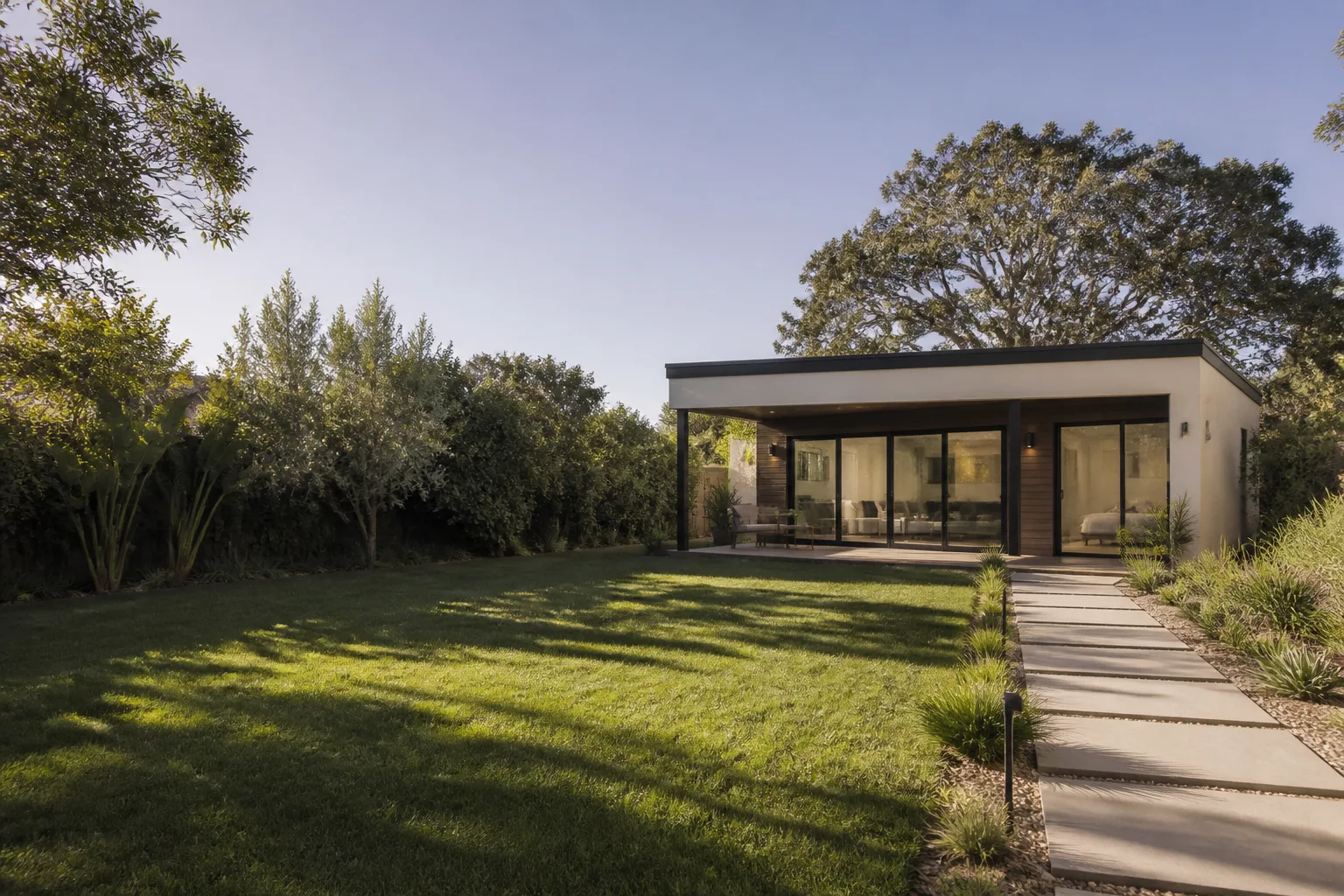
James Hardie ADU Builders in Los Angeles: What to Know First
As an independent James Hardie service provider, Seedling ADU Los Angeles builds and installs accessory dwelling units clad in HardiePlank lap siding, HardiePanel vertical siding, and HardieTrim boards throughout Los Angeles. A typical detached ADU using James Hardie siding takes four to seven months from permit submittal to final inspection, depending on your lot and the city’s review queue. We give every family a written price before any work starts, so you’ll know the full number before a single tool leaves the truck. Call (213) 449-7136 to talk through your lot.
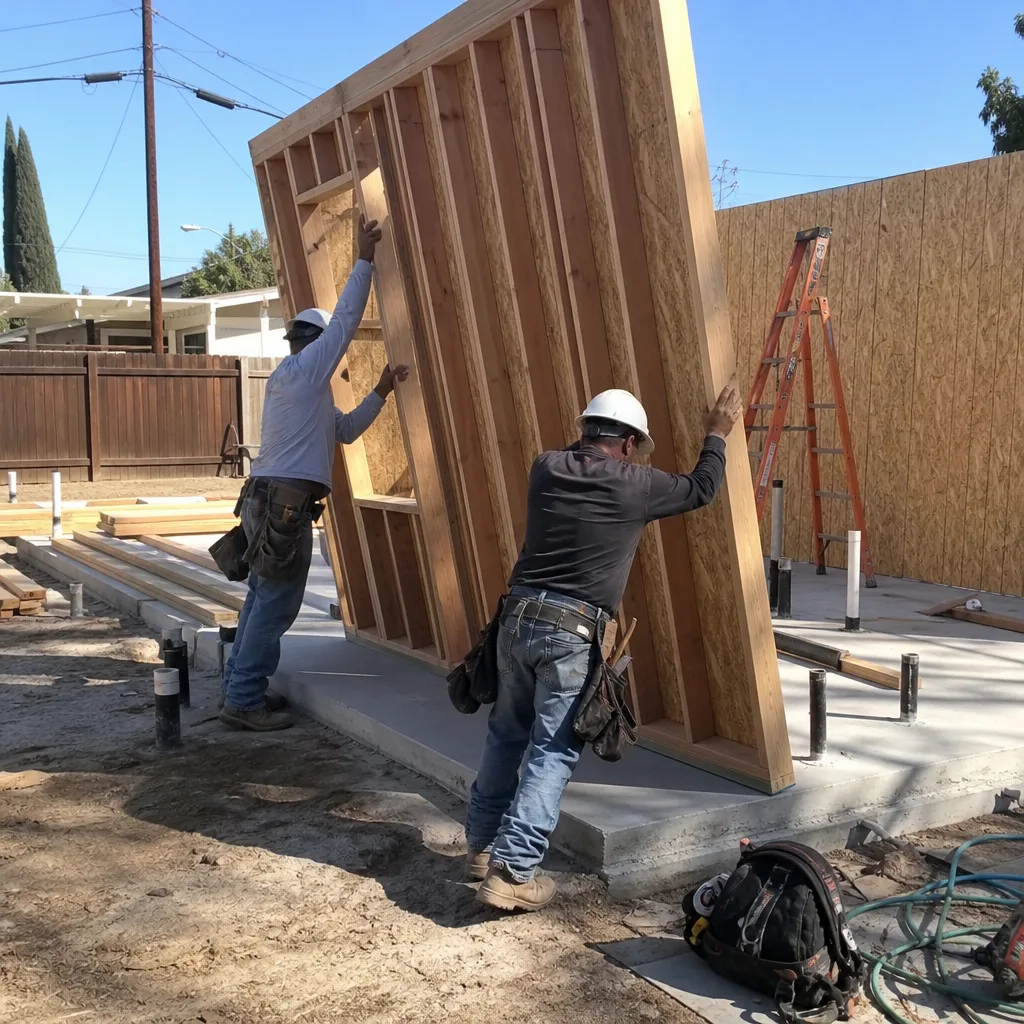
This page is for Los Angeles homeowners who already know James Hardie is the siding they want and need a builder who will install it correctly, flash it properly, and stand behind the finished unit. Ben Ortega leads our Los Angeles team, and we build every ADU as if a family member will move in, because in a lot of cases, one will.
How James Hardie Products Fail – and How We Fix Them
James Hardie fiber cement is a genuinely good product, but it fails in predictable ways when it is installed wrong or when Los Angeles weather does what Los Angeles weather does. Here is what we see on ADU jobs and how we address it.
- HardiePlank butt joints opening up at the seams. Fiber cement expands and contracts with temperature swings, and Los Angeles gets big daily swings in the foothill neighborhoods. When installers butt planks tight without the proper gap and flashing, the seams open and water gets behind the siding. We install with the manufacturer-specified gap, use caulk rated for fiber cement, and flash every joint so water has a path out, not in.
- HardiePanel wicking moisture along the bottom edge. This is the failure we see most often on detached ADUs in Los Angeles. HardiePanel vertical sheets sit close to grade, and sprinkler overspray or splashback from rain keeps the bottom edge damp. Once moisture wicks up into the sheet, the panel swells and delaminates. We set panels with a minimum 6-inch clearance from grade and install a capillary break at the bottom edge so the panel is never sitting in water.
- HardieTrim boards pulling away from the corners. Trim boards take the most movement on any structure. When installers use nails that are too short or miss the framing behind the trim, the boards work loose within a year or two. On our ADUs, we predrill and use stainless or hot-dipped galvanized fasteners sized to bite into framing, and we check every trim board for movement before the crew finishes the job.
- Paint adhesion failures on HardiePlank in coastal Los Angeles exposure. Fiber cement holds paint well only when the surface is clean and primed correctly. In neighborhoods like Playa del Rey or San Pedro, salt air accelerates paint breakdown when the siding was installed with a thin factory primer only. We use a primer-plus-two-coats system with acrylic paint rated for coastal exposure, and we document the paint specs in writing so the warranty on the finish holds up.
- HardieSoffit panels sagging in high-heat attic spaces. This one is specific to Los Angeles summers. When soffit panels are installed without proper ventilation gaps in an attic that hits 130 degrees, the panels can bow. We install HardieSoffit with vented panels where the roof design allows and make sure the attic airflow is right before the siding goes up. It is a detail most builders skip and owners don’t discover until the panels look wavy a year later.
Our James Hardie ADU Builders Process
Every James Hardie ADU we build in Los Angeles follows the same path. It keeps surprises off the table and gives you a clear picture of where the project stands at all times.
- 1
Lot walk and honest assessment. We visit your property, look at setbacks, access, existing utilities, and soil. We will tell you if a James Hardie-clad ADU is the right move for your lot, or if a different product fits better. We also give you the written price at this stage, before any commitment.
- 2
Permit package and submittal. We prepare the architectural drawings, structural calculations, and James Hardie product specifications, then submit to the Los Angeles Department of Building and Safety. You will know the realistic timeline for your specific review district.
- 3
Foundation and framing. We form and pour the foundation, frame the structure, and get it weather-tight. This is when we also set the flashing details that determine whether your James Hardie siding will last 20 years or 5.
- 4
James Hardie siding, trim, and soffit installation. We install HardiePlank, HardiePanel, HardieTrim, and HardieSoffit exactly per the manufacturer’s installation guide. Every nail, every gap, every flashing detail is documented with photos before the siding course covers the framing.
- 5
Final inspection and clean-up. We walk the unit with you, point out every detail, and make sure you are satisfied. Then the crew cleans up, and we send you a photo of the clean-up before they leave. That is the Cedarwell Care Promise, and it is part of every Seedling job.
- 6
365-Day Done Right Promise. If anything is not done right, we make it right, in writing, for a full year after we finish. That covers the ADU, the siding, the trim, the flashing, and the paint.
What James Hardie ADU Builders Cost in Los Angeles
The cost of a James Hardie-clad ADU in Los Angeles varies by size, site conditions, and finish level. Here are the numbers we see most often in the field right now:
- Studio ADU (350-500 sq ft) with HardiePlank siding: $165,000 – $235,000
- One-bedroom detached ADU (500-750 sq ft) with HardiePanel and HardieTrim: $220,000 – $320,000
- Two-bedroom ADU (750-1,000 sq ft) with premium HardiePanel vertical application: $310,000 – $450,000
- Garage conversion with James Hardie siding replacement: $120,000 – $210,000, depending on whether the existing garage framing and foundation can be reused
What moves the price most: soil conditions, setback variances, utility connection distances, and the siding profile you choose. HardiePanel vertical siding with battens runs a bit more than standard HardiePlank lap due to labor. We give you a written price before we start, and that number does not change unless you change the scope. Call (213) 449-7136 for a free estimate.
Why Los Angeles Homeowners Call Seedling ADU Los Angeles for James Hardie Work
We are a James Hardie-focused builder, not a general contractor who happens to hang fiber cement once in a while. Our crew installs Hardie siding every week, and they know the product’s tolerances, its failure points, and how to keep it looking right in Los Angeles heat, wind, and coastal air. Ben Ortega has spent the better part of a decade on ADU work across this city, and he still walks every job site personally before the siding goes up.
Every Seedling build is covered by the 365-Day Done Right Promise. If something is wrong, we fix it, in writing. Our techs arrive background-checked and uniformed, they lay drop cloths and wear shoe covers inside the home, and they use pet-safe products where there is a choice. A live person answers our phone 24/7, so when you have a question mid-build, you talk to a human, not a voicemail tree. We also work with Abodu, Cover, and Dvele on prefab ADU installs, so if James Hardie turns out not to be the right siding for your particular lot, we will tell you honestly and show you the alternatives.
FAQs
Yes. We handle the entire permit process with the Los Angeles Department of Building and Safety, including architectural drawings, structural calculations, and James Hardie product specifications. We will not start a build without an approved permit, and we will tell you the realistic timeline for your review district before we submit.
A typical detached ADU with James Hardie siding takes four to seven months from permit submittal to final inspection. The biggest variable is the city’s plan review queue, not the construction itself. Garage conversions usually move faster because the existing structure shortens the framing and foundation work. We will give you a written timeline alongside your written price.
That depends on the age of the siding and the extent of the damage. If the HardiePlank boards are still structurally sound and only a few seams have opened, spot repair with proper flashing and primer makes sense. If you see delamination along the bottom edge of HardiePanel sheets or trim boards pulling away in multiple corners, full replacement is almost always the better investment. We will show you photos of exactly what we found and give you a written price for both options.
Yes, fiber cement holds up well in extreme heat, but only when it is installed with the right gaps and ventilation. The failures we see in Los Angeles are almost always installation failures, not product failures. If the installer butted the planks tight or skipped the bottom-edge flashing, the heat accelerates the problem. We install per the manufacturer’s guide and document everything with photos before the siding course covers the framing.
No. Your written price covers the scope we agreed on before any work began. The only way the number changes is if you change the scope, like adding square footage or upgrading from HardiePlank to a vertical HardiePanel application. Every change gets a written line item before we proceed, so there are never surprise charges at the end. Call (213) 449-7136 and Ben will walk you through the numbers personally.
Written by Ben Ortega, Owner, Seedling ADU Los Angeles at Seedling ADU Los Angeles, serving Los Angeles and nearby areas.


